Estimated Reading time

11 Mins
2025 in Review: 25 Good News Stories from First Nations
Through a year of political and economic complexity, First Nations led positive change by advancing sustainable energy projects, growing their stewardship and Guardian programs, expanding conservation financing, and investing in community-led economic development.
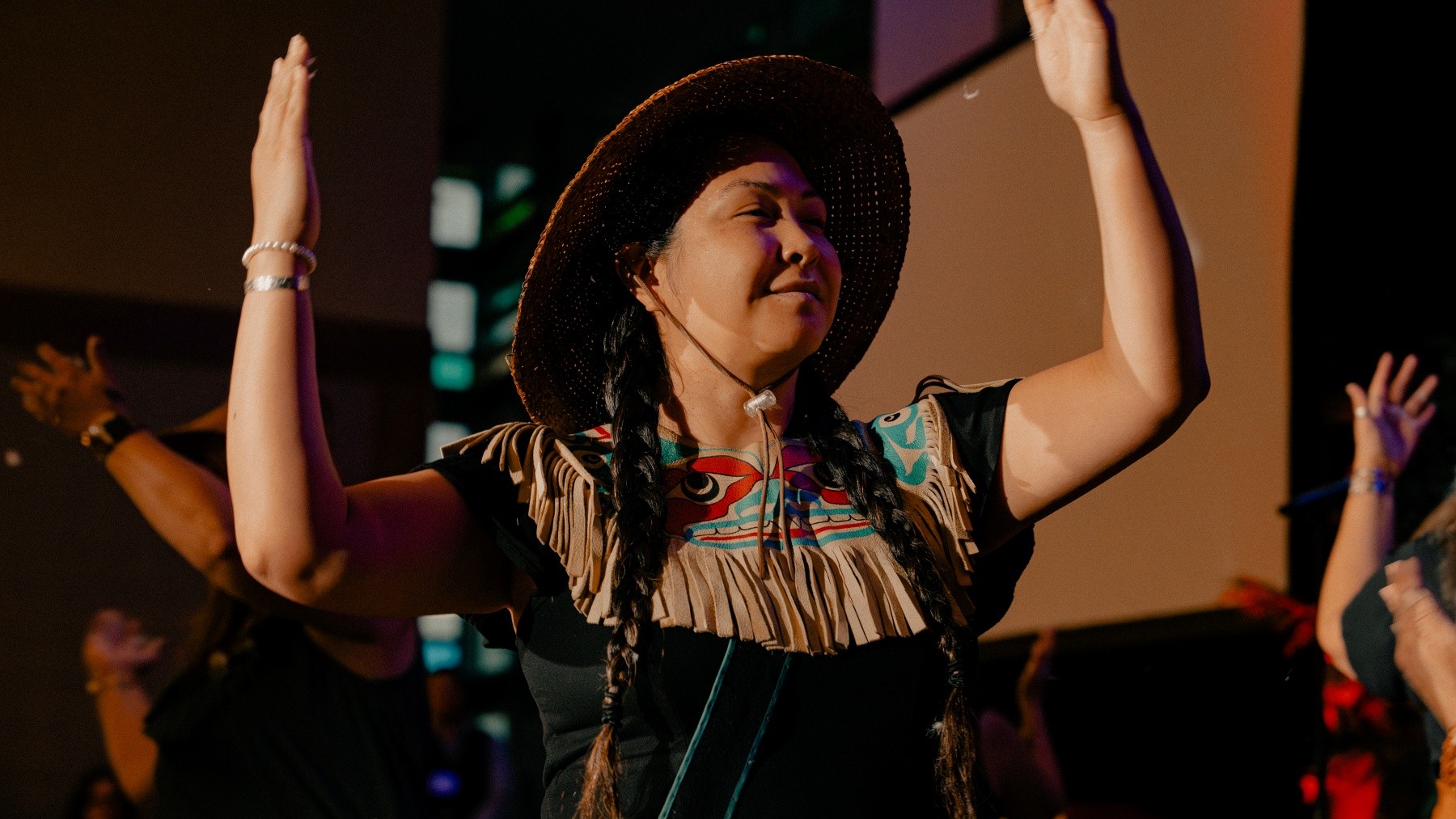
This year, First Nations in the Great Bear Rainforest and Haida Gwaii were recognized for their leadership in stewarding their lands and waters, strengthening governance and partnerships, and revitalizing languages and cultural traditions.
Nations ratified new treaties and constitutions, advanced Indigenous-led conservation financing, expanded Guardian and stewardship programs, and led historic clean-energy transitions. Communities also invested in sustainable tourism, local businesses, and regional infrastructure, supporting vibrant local economies grounded in Indigenous governance and values.
Below, our team has rounded up 25 good news stories from 2025, grouped into six themes:
- Conservation Finance
- Stewardship and Conservation
- Governance
- Sustainable Energy
- Economic Development
- Arts and Culture
Conservation Finance
1. Indigenous Nations share conservation finance strategies at International Symposium on Conservation Impact
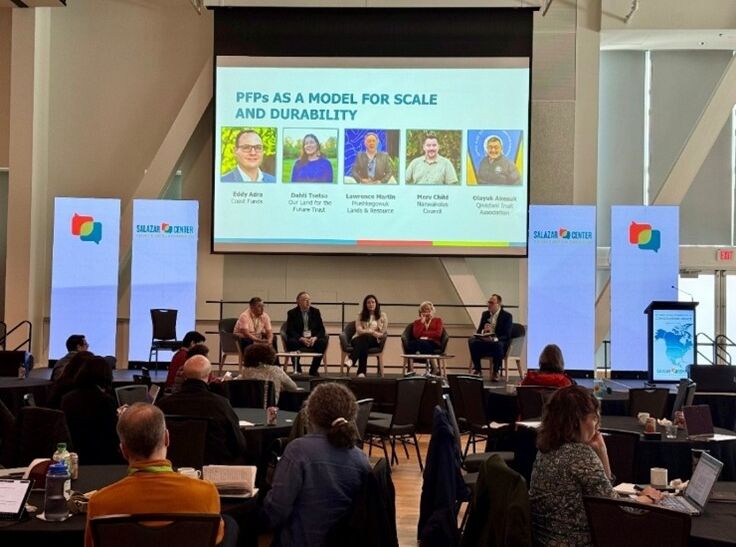
Representatives from Indigenous Nations in Canada and internationally gathered at the Salazar Center’s 2025 Symposium to share their experiences with conservation finance, with a focus on the project finance for permanence model that’s being to protect the Great Bear Sea, the Northwest Territories, and the Qikiqtani region, and in development in northern Ontario.
 2. Great Bear Rainforest featured in two new conservation finance guidebooks
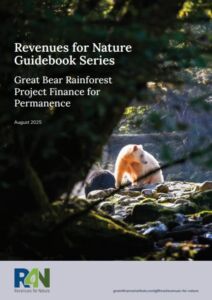
The 2006 Great Bear Rainforest agreement, which paired ecosystem protections with $120 million in conservation financing, was featured in the Green Finance Institute’s Revenues for Nature series, and in the International Union for Conservation of Nature’s Practice Guidelines on Financing Protected and Conserved Areas, which includes a chapter on Indigenous conservation finance.
3. Wuikinuxv and Coast Funds explore innovative funding for salmon restoration
Wuikinuxv Nation is working to restore watersheds and salmon populations in their territory. To help finance this important work, the Nation is working with Coast Funds to explore innovative funding tools, including impact bonds and other mechanisms, with support through the Conservation Finance Alliance incubator program.
4. First Nations in the Northwest Territories secure $300 million in long-term conservation financing
The Our Land for the Future initiative will deliver long-term financing for First Nations’ stewardship and Guardian programs, climate response, and community-led conservation projects.
5. Through the SINAA Agreement, Inuit Nations and organizations set to build a conservation economy in the Qikiqtani region
In November, Qikiqtani Inuit Association announced a $270-million agreement with the Government of Canada and philanthropic partners.
Through the agreement, the funding will help create new jobs in a conservation-based economy, support Nauttiqsuqtiit Guardian programs, support conserved and protected areas, and build conservation centres. SINAA is one of four Canadian projects being funded under the project finance for permanence model, building on the model first trialed in the Great Bear Rainforest that’s extended to the Great Bear Sea.
6. Economic analysis shows First Nations have generated $1.77 billion in gross output over 17 years, with economic development funding at Coast Funds
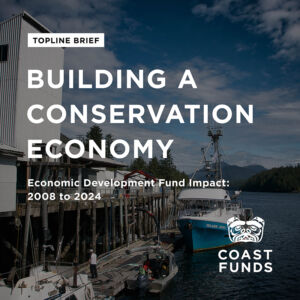 Coast Funds’ latest report, Building a Conservation Economy, highlights the collective impact of First Nations’ investments in economic development in the Great Bear Rainforest and Haida Gwaii.
Leveraging a $60-million economic development fund, First Nations have generated $331 million* in household income, supporting an annual average of 373 full-time jobs per year, and contributed $808 million* to the province’s GDP.
The analysis, commissioned by Coast Funds and completed by Big River Analytics, accounts for the direct, indirect, and induced impacts of First Nations’ business investments in the region.
(* inflation-adjusted to 2024 dollars)
Economic development can’t happen without conservation and sustainability. Working with our cultural values, we’ve been able to balance economic development with community needs and long-term sustainability.
– Shane Harsch, Director, Haida Enterprise Corporation (HaiCo)
Stewardship and Conservation
7. First Nations Guardians learn, build relationships through gatherings and exchanges
Guardians along the Great Bear Coast came together several times over the year to share their accomplishments, learn from one another, and build relationships between Nations.
In February, the Coastal Stewardship Network and BC’s Ministry of Water, Land and Resource Stewardship organized an exchange for Metlakatla, Haida, and Nuxalk Guardians to work in each other’s territories, strengthening Nation-to-Nation relationships.
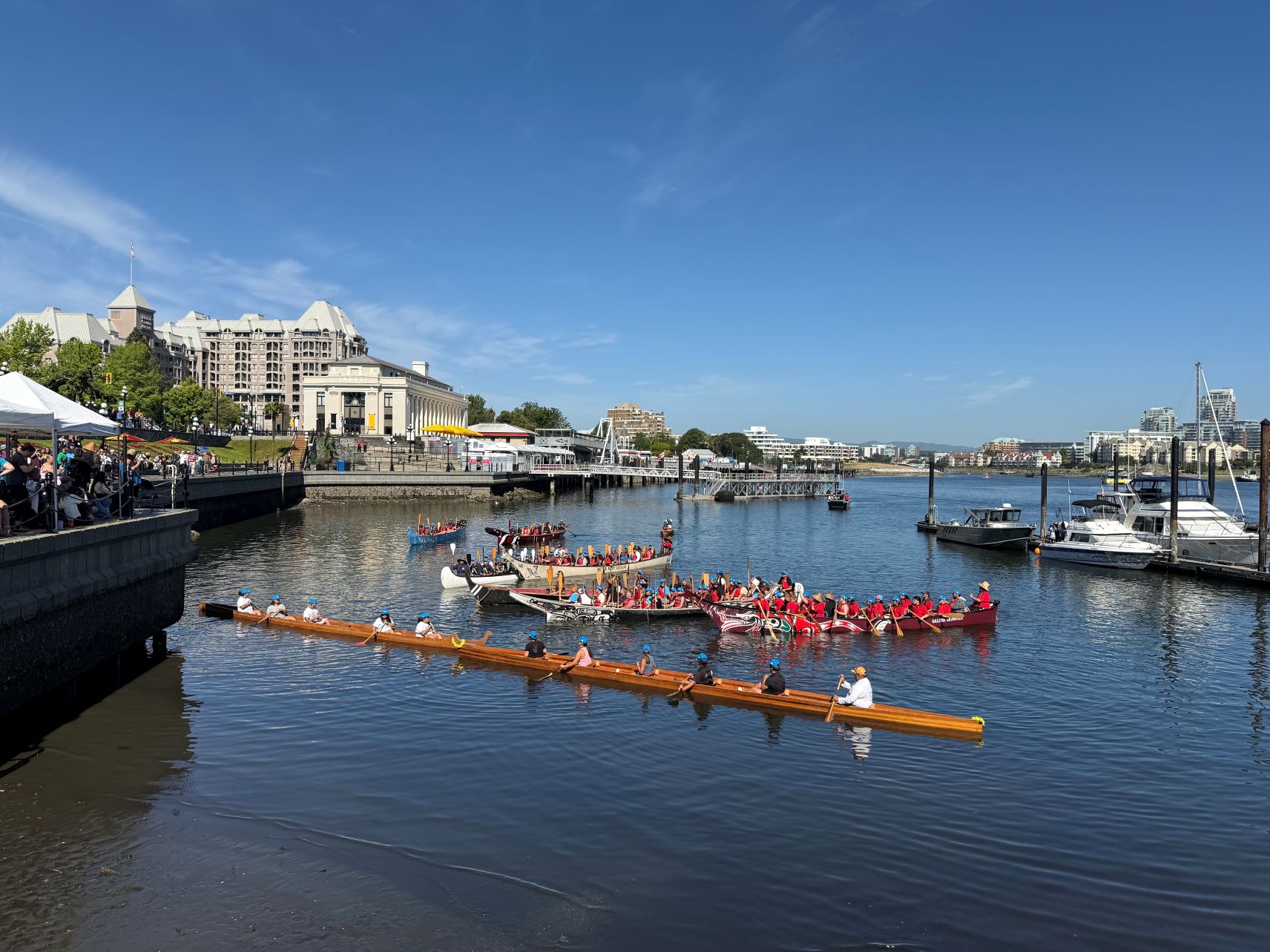
In June, the Indigenous Leadership Initiative and National Guardian Network hosted the sixth annual National Guardians Gathering, bringing hundreds together on lək̓ʷəŋən territory Victoria for three days of learning, cultural activities, and celebration of Indigenous-led stewardship.
You are the heartbeat of your Nation, you are the carriers of your ancestral responsibility from your Nation, and you are the hands that hold your sacred relationship to the land and the waters.
– Gillian Stavely, Council Member of the National Guardians Network
And, in November, Na̲nwak̲olas Council brought Guardians from member Nations together through the Ha-ma-yas Stewardship Network to share knowledge and celebrate their achievements.
8. Conservation and climate action milestones
Haíłzaqv Hereditary Chief λáλíya̓ sila Frank Brown was named Indigenous Climate Fellow at the Pacific Institute for Climate Solutions, where he will support the inclusion of Indigenous knowledge in climate research and the implementation of the BC First Nations Climate Strategy and Action Plan.
Clayoquot Sound UNESCO Biosphere Region, a region that includes the traditional territories of the Hesquiaht, Ahousaht and Tla-o-qui-aht First Nations, celebrated 25 years of conservation and community building.
Mamalilikulla First Nation and community members are working together to revitalize ancient loxiwe clam gardens and restore a food system that sustained their ancestors for millennia.
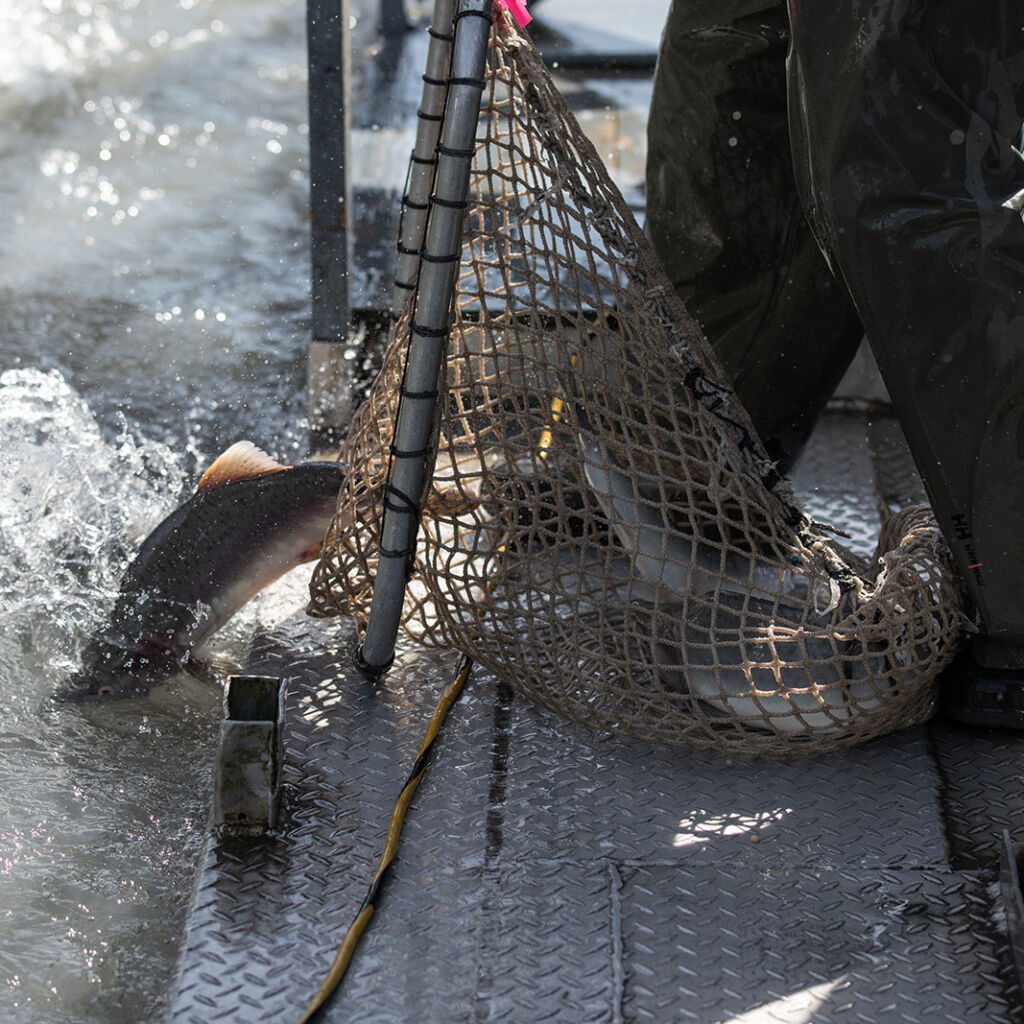
9. Nisg̱a’a Nation is using fishwheels to advance salmon stewardship
Nisg̱a’a Nation is leading salmon stewardship efforts on Ḵ’alii-Aksim Lisims Nass River. Using fishwheels and tools like radio telemetry, the Nisg̱a’a Fisheries and Wildlife Department tracks salmon migration, mortality, and population trends through catch-and-release monitoring. Data collected supports ongoing Nisg̱a’a decision-making about harvest counts and stewardship planning.
10. Coastal Nations advanced new marine protected areas, safeguarding wildlife habitat and culturally-significant places
Following the signing of the Great Bear Sea PFP agreements, participating First Nations are making strides in marine and coastal conservation:
- Gitga’at First Nation and Gitxaała Nation, in partnership with the province, established a new 1,450-hectare Wildlife Management Area in the Great Bear Sea.
- Haida Nation announced the establishment of two new marine refuges, G̲aw K̲áahlii Masset Inlet and X̲aana K̲aahlii Skidegate Inlet, to protect areas of cultural and ecological significance on Haida Gwaii.
- Gitxaała Nation announced the establishment of a new marine refuge near Lax k’naga Sts’ool Banks Island, safeguarding ecologically rich habitats including corals, kelp forests, and eelgrass – vital habitat for species such as rockfish.
11. Haíɫzaqv Nation’s AI-powered sockeye monitoring program received a national innovation award
Combining Traditional Knowledge and modern science, Haíɫzaqv Nation co-developed a solar-powered, AI-assisted monitoring system that counts and identifies salmon moving through the Koeye River. Collected data informs harvesting decisions and supports food security. In recognition of their success, the Nation received the Innovative Community or Organization Award from the First Nations Technology Council.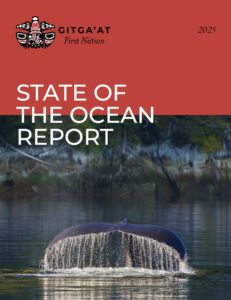
12. Gitga’at Nation publishes 2025 State of the Ocean report
Gitga’at Nation released its annual stewardship and monitoring report, capturing the daily work of Guardians, researchers, students, and community members who monitor and protect Gitga’at lands and waters.
Throughout the year, Guardians conducted vessel monitoring, salmon counts, harmful algal bloom tracking, and intertidal and subtidal surveys. Their observations help strengthen decision-making and support the Nation’s inherent stewardship responsibilities in their marine territory.
Governance
13. Haida Nations Aboriginal title gains federal recognition
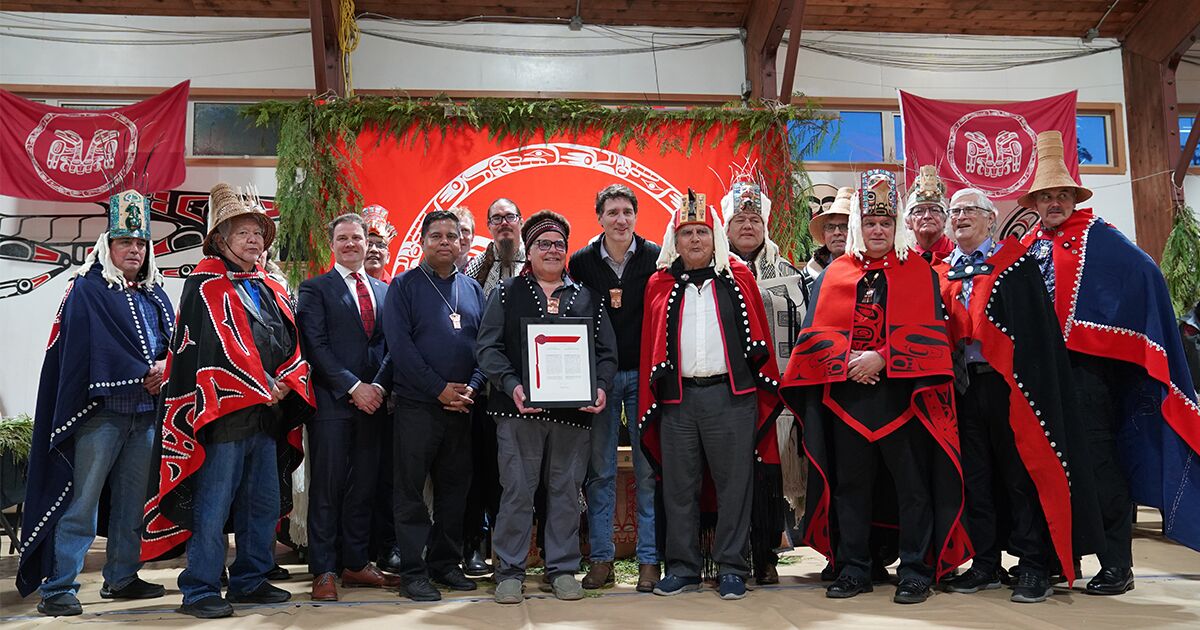
In February, the Haida Nation and the Government of Canada reached a historic milestone through the Chiix̲uujin | Chaaw K̲aawgaa “Big Tide (Low Water)” Haida Title Lands Agreement, marking federal recognition of Haida Aboriginal title over Haida Gwaii, including lands and foreshores to the low-tide line.
This agreement follows more than 100 years of Haida advocacy, and legal action, and is the first time the federal government has recognized Aboriginal title through negotiation (rather than through courts), setting a precedent for future Nation-to-Nation agreements.
14. Treaty and governance milestones
Along the coast, many First Nations marked major treaty and governance milestones in 2025:
- Kitsumkalum First Nation ratified its treaty and constitution, granting them to more than 460 square kilometres of land, self-governance, and stewardship over their territory and resources.
- K’ómoks First Nation members voted in favour of both a treaty and constitution.
- Kitselas First Nation members voted to become self-governing through a modern treaty and written constitution.
- Nisg̱a’a Nation celebrated 25 years of self-governance under its modern treaty.
- Haíłzaqv (Heiltsuk) Nation ratified its written constitution and marked the occasion with a ceremony in their λiác̓i Big House.
Sustainable Energy
15. K’ómoks Nation and the Nisg̱a’a Village of Gitlaxt’aamiks invested in sustainable energy projects.
K’ómoks First Nation and the Nisg̱a’a Village of Gitlaxt’aamiks are using federal funding to install solar panels on homes and add electric heat pumps to community homes and buildings. These investments will help lower utility bills, increase energy sovereignty, and reduce emissions.
16. Tll Yahda Energy connects Haida Gwaii’s Solar North project to the northern grid
Tll Yahda Energy – a partnership between Skidegate Band Council, Old Massett Village Council, and the Council of the Haida Nation – achieved a major clean-energy milestone in Haida Gwaii with the launch of Solar North, the first Indigenous-owned and operated solar plant in a non-integrated area of BC.
Located near the Masset airport, the two-megawatt facility now supplies electricity to BC Hydro’s northern microgrid on Haida Gwaii and is expected to offset roughly 350,000 litres of diesel each year, significantly reducing emissions and reliance on fossil fuels in the region.
17. Ulkatcho First Nation breaks ground on largest off-grid solar project
In June, Ulkatcho First Nation held a groundbreaking ceremony to launch the Anahim Lake Solar Project, which will be the largest off-grid solar installation in Canada. Fully owned by the Ulkatcho Energy Corporation, the facility will reduce community diesel use by an estimated 64 per cent, cutting emissions and supporting long-term energy security for residents of Anahim Lake and surrounding communities.
Economic Development
18. First Nations invest in new businesses along the coast
First Nations advanced community-driven economic development projects in their territories:
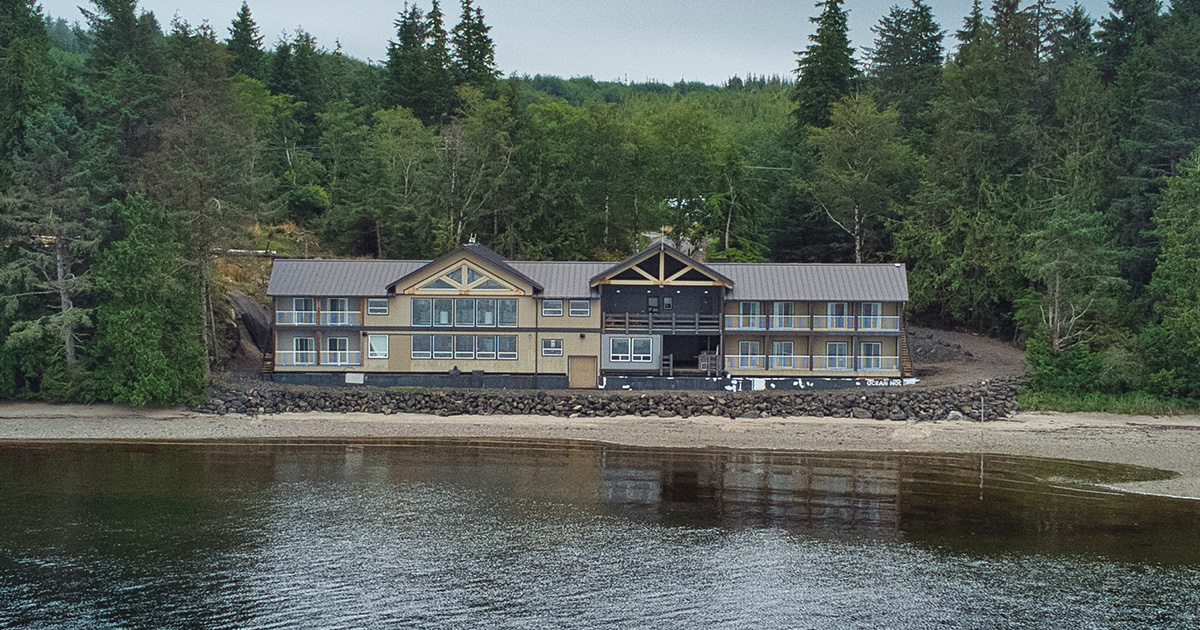
- Haida Nation opened Ocean House at Tlaga G̲áwtlaas, expanding sustainable tourism that shares Haida culture while creating local jobs and strengthening the regional economy.
- yáqʷa Development Corporation, x̄á’isla (Haisla) Nation’s economic development arm, carried out renovations at Gizuá Market in Kitamaat Village.
- Metlakatla Development Corporation, the business arm of the Metlakatla First Nation, advanced work on the South Kaien Import Logistics Park, working closely with the Prince Rupert Port Authority.
19. First Great Bear Rainforest Economic Summit brings economic leaders together
Leaders from 15 First Nations gathered in Vancouver for the Great Bear Rainforest Economic Summit, coming together to reflect on nearly two decades of Nation-led economic development and look to future opportunities.
The event highlighted projects First Nations have led, using $60 million in economic development funding secured through the 2006 Great Bear Rainforest Agreement. Over 17 years, Nations have supported more than 1,000 jobs, invested in over 120 businesses, and attracted $207 million in additional investment to the region.
20. Tlowitsis Nation hosted an open house for the new Nenagwas community
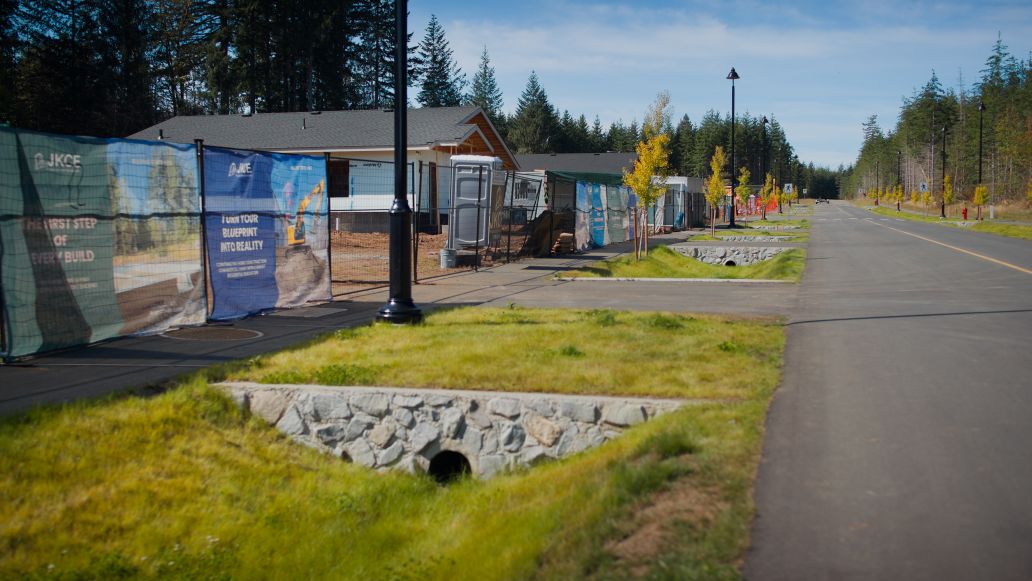
Tlowitsis Nation welcomed guests to Nenagwas, a new community being developed as part of the Nation’s ongoing treaty work.
The first homes are nearly complete, and future development phases will include a carving studio, health centre, administrative buildings, and a Big House.
Art and Culture
21. First Nations carvers launched a traditional canoe and created living carvings
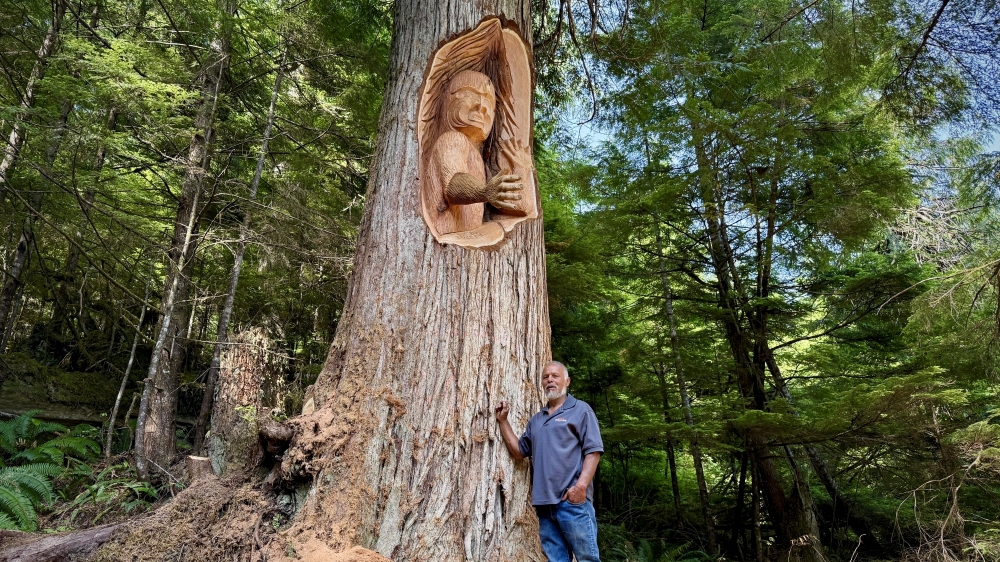
In August, We Wai Kai, Wei Wai Kum, and K’ómoks carvers launched an ocean-going xwax’wa̱na canoe, carved from a windfallen red cedar. While the carvers were at work on the canoe, they also created three ‘living carvings’ in the forest. These projects, supported by Na̲nwak̲olas Council, are helping to revive ancestral carving traditions.
22. Khasalus Kolten Grant debuts new mural in Coast Funds office
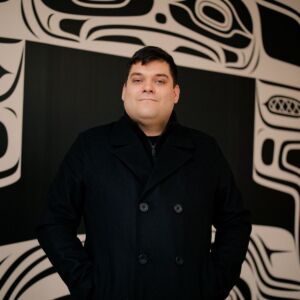
Khasalus Kolten Grant, from the Musgamagw, Dzawadaenuxw, Kwakiutl, Tlowitsis, Squamish, and N’Quatqua St’at’imc Nations, shared moments that shaped him as an artist. His latest creation, a mural now on display at the Coast Funds office, uses formline and technical elements to depict spiritual beings and teachings that inspire his work.
23. First Nations performers and artists take centre stage
Indigenous artists, filmmakers, and designers earned national recognition this year:
- Snotty Nose Rez Kids, from x̄á’isla Nation, became the first Indigenous group to win Rap Album/EP of the year at this year’s Juno Awards.
- Haida Nation director Nang Ḵ’uulas Patrick Shannon’s documentary Saints and Warriors saw major success on the film festival circuit.
- This year’s Vancouver Indigenous Fashion Week featured creators from many of the First Nations Coast Funds serves, such as: Copper Canoe Woman, Himikalas Pamela Baker, Yolanda Skelton, Rebecca Baker-Grenier, and HISTORYMKRS.
- Kitasoo Xai’xais singer-songwriter Hayley Wallis released her new single, Better Than This.
24. Cultural belongings returned and renewed
First Nations celebrated the return, renewal, and discovery of cultural belongings and important community markers.
- Nisg̱a’a Nation welcomed the house pole of Sim’oogit Laay’ home, marking a powerful moment of cultural reconnection.
- Haíłzaqv Nation celebrated the return of a ceremonial bentwood box to its rightful home.
- Kitselas First Nation raised a new totem pole, the first in more than ten years, carved by Stan Bevan alongside community artists.
- K’ómoks First Nation saw the uncovering of rare 3,800-year-old cultural belongings within their territory.
- We Wai Kai Nation and Finning Canada raised a 24‑foot cedar totem at Quinsam Crossing near Campbell River, carved by Max Chickite with help from his daughter, Jessica Chickite.
25. First Nations art exhibits in Vancouver
First Nations opened and led exhibitions that celebrate their governance traditions, culture, and artistic innovation:
- The Nuxalk Strong exhibition at the Museum of Anthropology, open through January 2026, celebrates Nuxalk knowledge, governance, and cultural expression.
- The Bill Reid Gallery is hosting “Kihl ‘Yahda Christian White: Master Haida Artist” through February 2026, the first major solo exhibition of Kihl ‘Yahda’s 50-year career.
- The Bill Reid Gallery also features multiple Nations in its NDN Giver exhibition, on through February 2026, which explores giving and the responsibilities of Potlatch law.
Thank you for reading and reflecting on the incredible wins First Nations in the Great Bear Rainforest and Haida Gwaii achieved in 2025. As we look ahead to 2026, we are excited to continue amplifying First Nations’ stories and efforts to shape a sustainable future for coastal communities.
Stay connected for more updates and opportunities to engage in this vital work. You can follow along with our journey through our website, Talking Stick newsletter, and social media channels as we support First Nations in their ongoing efforts to lead environmental and cultural stewardship.
Follow us on: Facebook | LinkedIn | Instagram | Bluesky
More in this series: 2024 in Review | 2023 in Review | 2022 in Review