Estimated Reading time

4 Mins
Oolichan and the Changing Season
First Nations on the coast mark winter’s end with the return of a small silver fish – now rebounding in abundance in some areas under Nations-led stewardship.
As oolichan return to spawn, First Nations on the coast mark the transition from winter to spring with celebrations such as Hoobiyee and the spring equinox.
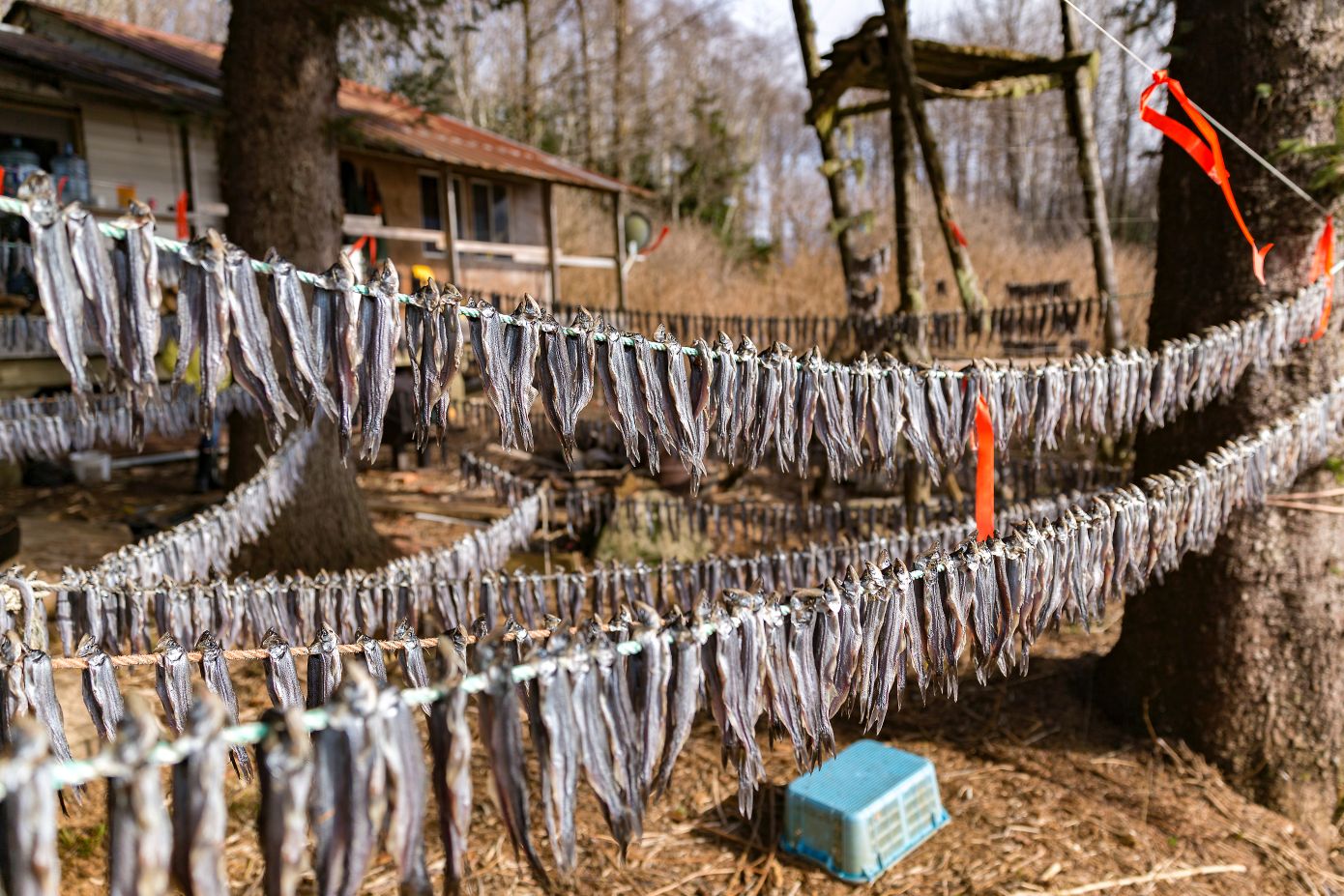
For millennia, First Nations on the coast of British Columbia have sustainably harvested oolichan, a finger-sized oily fish that is a member of the smelt family. Oolichan (also spelled eulachon, ooligan, and hooligan, depending on where you are) are sometimes called candlefish because, when dried, they hold enough oil to burn like candles.
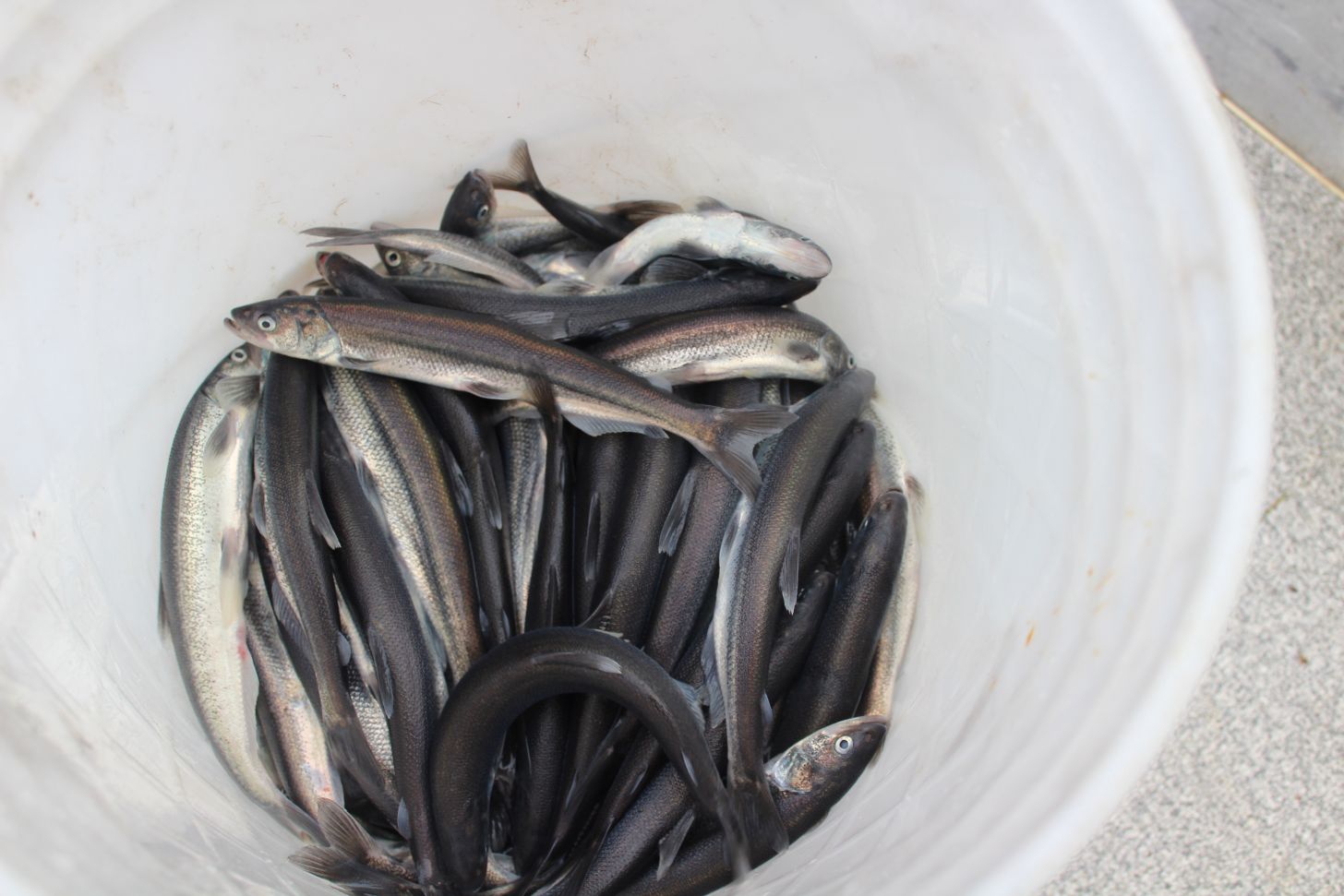
Oolichan are of great significance to First Nations on the coast, offering substantial sustenance at the end of winter. They have been used for thousands of years for food, medicine, ceremonies, and trade. First Nations people process the grease from aged oolichan and transport it through the mountains to trade with coastal and interior communities. These trade routes, also known as grease trails, have lasted thousands of years and can still be walked to this day.
Like salmon, oolichan spend the majority of their lives in ocean waters and return to their spawning grounds in rivers and streams to complete their life cycle. But, since the early 90s, oolichan populations have declined significantly, likely due to habitat loss, overfishing, pollution, and climate change. According to Central Coast Indigenous Resource Alliance records, there are just 15 rivers in BC carrying oolichan.
Nuxalk scientist Ts’xwiixw Megan Moody, has studied oolichan populations and impacts of climate change to oolichan. Her research and previous work in the field as fisheries manager and, later, stewardship director for Nuxalk Nation, combines Traditional Knowledge and Western scientific methods.
In 2024, Nuxalk Nation led stewardship efforts that saw the biggest return of oolichan to their territory, the Bella Coola River, in decades.
“Although this run was no where near historical run sizes,” says Megan. “The schools of fish, for a short period of time, were a welcome sight.”
Sputc (the Nuxalk word for oolichan) continue to be extensively researched by Nuxalk experts and the Nuxalk Stewardship Office. Since 2001, the Nuxalk Fish and Wildlife Department have conducted an annual Nuxalk Ooligan Study monitoring the Bella Coola River population.
“The study has generated over 25 years of high quality data and understanding of local oolichan science and status,” says Megan.
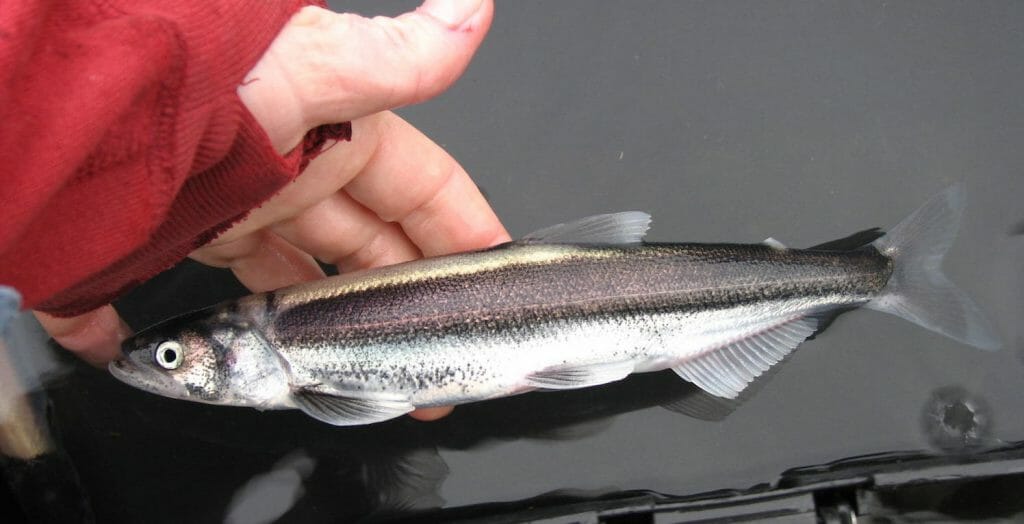
“A book called Alhqulh ti Sputc The Sputc Book was created and based on extensive community-engaged research that was conducted between 2014 to 2017.” Alhqulh ti Sputc brings together ancestral (traditional) and contemporary Nuxalk knowledge about oolichan in all its forms,” shares Megan.
Distributed to all community members, and officially approved by Hereditary leaders, this book has become a household staple used in the school curriculum and as an example for other similar projects. It includes detailed knowledge about Nuxalk stewardship values and practices.
Megan, who is also a Coast Funds board director, is working with her community on a Nuxalk stewardship plan for sputc.
“This plan aims to build on place-based ancestral and contemporary Nuxalk eulachon knowledge, governance, and science,” she says. “It is situated within and connected to the larger context of eulachon and anadromous fisheries management and Indigenous governance along the coast.”
First Fish, First Crescent Moon
Further north, Nisga’a construct camps along the banks of Ḵ’alii Aksim Lisims Nass River to harvest and process oolichan, a tradition they’ve been practicing since before recorded time.
Historically, Nisga’a would spend months in Lax– Da’oots’ip as they caught the first fish of the year. In a 2018 story published by Coast Funds, Nicole Morven, Harvest Monitoring Coordinator with Nisga’a Fisheries and Wildlife Department, recalled hearing from Elders that camps would operate for up to three months. “The women would be there too,” she said. “Helping to get wood and clean up, getting the poles and gear ready for the whole season.”
Although oolichan have always played a major role in the trading economies and culture of many First Nations, in Nisga’a territory the fish was never extensively exploited through Western commercial economies.
In her thesis research, Megan Moody, summarized that a small commercial fishery for Ḵ’alii Aksim Lisims oolichan existed in the first half of the 1900s until the Nisga’a Tribal Council Convention declared in 1955 that “no Nass River caught oolichans be sold commercially.” Because of this, oolichan return to Ḵ’alii Aksim Lisims in abundance every year.
Today, most of the oolichan caught and processed on the Nass River are distributed among community members or traded with neighbouring First Nations. Oolichan continues to play a significant role in the economies of coastal communities as Nisga’a citizens trade their resource for shellfish, herring, seaweed, and halibut.
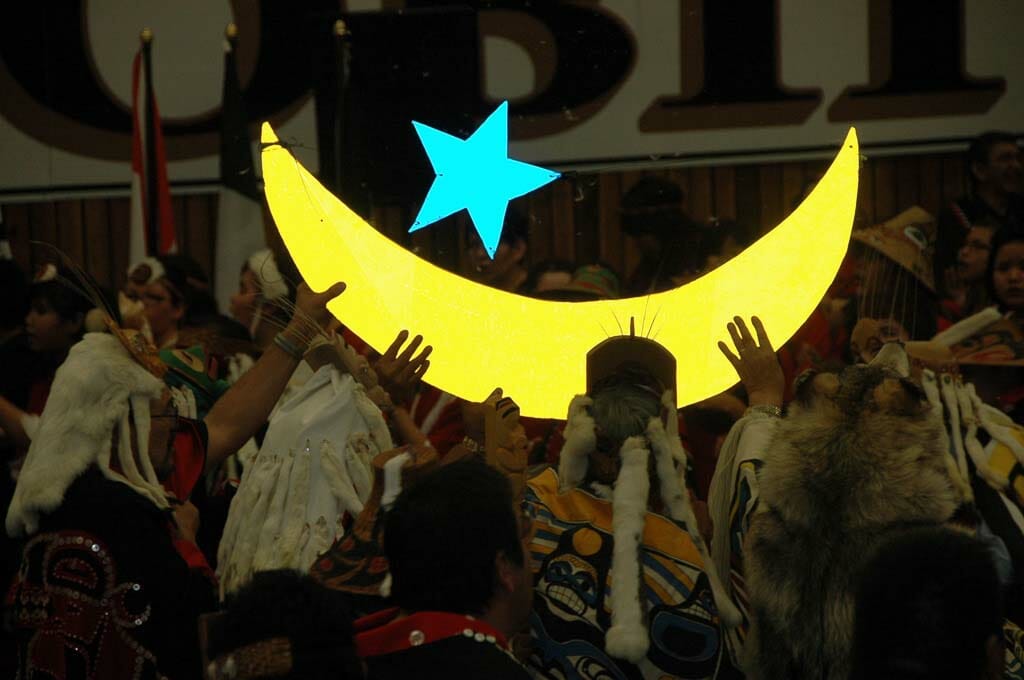
Chief Harry Nyce Sr says the fish continues to be a mainstay of Nisga’a culture. “For us, it is a life-saving fish,” he says. “It’s the first fish that comes in the New Year arriving as winter supplies are dwindling.” Hoobiyee, the Nisga’a new year, starts during spring equinox with the migration of oolichan into Ḵ’alii Aksim Lisims.
Lasting about a week, Hoobiyee celebrates the waxing crescent moon. The unique positioning of the moon and stars is said to predict the spring harvest of oolichan, salmon, and other food sources, preparing Nisga’a for the year ahead. Today, the celebration, which is deeply rooted in thousand-year-old Nisga’a traditions, has been adopted by other Indigenous Nations.
This year, Nisga’a celebrated Hoobiyee at an event in Gitwinksihlkw between February 20 to 21, 2026.
Read The Saviour Fish: Protecting Nisga’a Connection to Oolichan