Estimated Reading time

2 Mins
Mia-yaltwa Ha’lidzogm hoon Brings Ecosystem Protections, Collaborative Management to the Centre of the Great Bear Sea
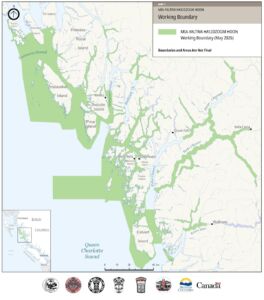
Six First Nations, the Government of Canada, and the Province of British Columbia announce a National Marine Conservation Area Reserve – part of the Great Bear Sea MPA Network – that will protect up to 6,700 square kilometres of coastal waters.
Last month, leaders from the Wuikinuv, Nuxalk, Kitasoo Xai’xais, Haíɫzaqv, Gitxaała, and Gitga’at First Nations, alongside the Governments of Canada and British Columbia, signed an agreement to establish a new National Marine Conservation Area Reserve (NMCAR) off the central coast of British Columbia.
At the same time, the six First Nations declared an Indigenous Protected and Conserved Area (IPCA) under their own authorities within the same 6,700 km2 spatial boundary. Together, the IPCA and NMCAR create complementary Indigenous and Crown protections for these waters. As part of the Great Bear Sea MPA Network, Mia-yaltwa Ha’lidzogm hoon will be co-governed by Indigenous and Crown governments who, through the Great Bear Sea PFP, are investing in marine stewardship and coastal economic development in the region.
Mia-yaltwa Ha’lidzogm hoon, the name for the new NMCAR and IPCA, uses words from the Haíłzaqvḷa, Nuxalk, ’Wùik̓ala, Xai’xais, Sgüüx̣s, and Sm’algya̱x language traditions and translates to “Realm of the Salmon, Home of the Salmon” (and can be pronounced phonetically as Me-ah-yall-twa Ha-lee-joh-gom hOH-own.)
“This marine protected area is not only a sanctuary for marine life but also a bold step forward in our shared responsibility as stewards of the ocean,” said Kitasoo Xai’xais Nation Chief Councillor Chris McKnight in an announcement. “For the first time in our Nation’s history, this area will be recognized as both an Indigenous Protected Area and a National Marine Conservation Area Reserve, uniting our efforts with provincial and federal governments to manage this precious resource collaboratively.”
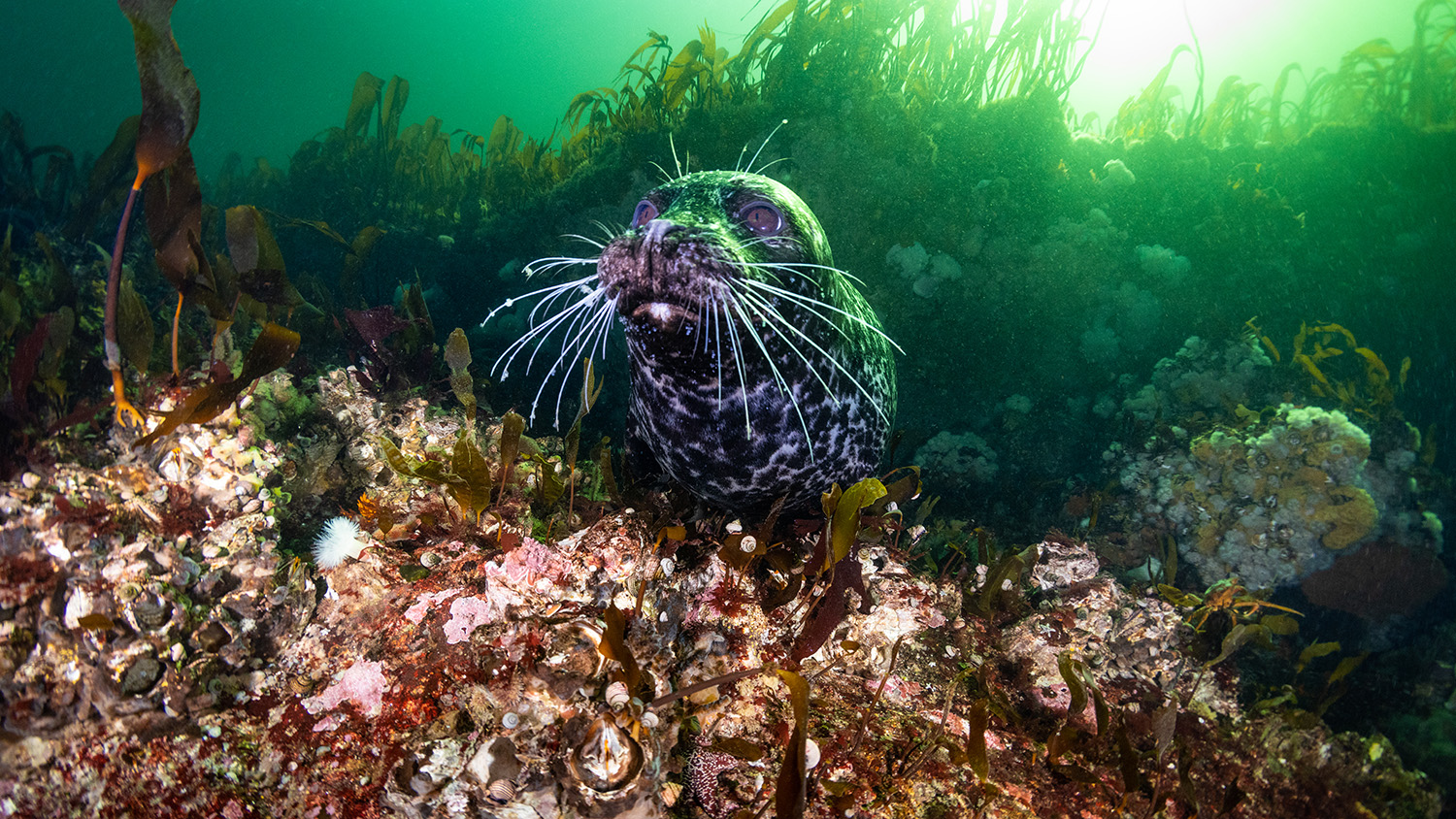
The Mia-yaltwa Ha’lidzogm hoon NMCAR and IPCA will help to restore fish populations and sustain the biodiversity of the central coast – an ecological treasure that features rare glass sponge and coral reefs, deep fjords, that reach into the mainland, and estuaries that connect fresh and salt waters. Historically, these environments have supported legendary salmon runs and abundant populations of herring, oolichan, whales, seals, and sea birds. In turn, this abundance has sustained coastal peoples and the ‘Great Bears’ that inspired this region’s name.
“For many years, we have watched our oolichan disappear and our salmon stocks diminish,” said Wuikinuxv Nation Chief Councillor Marlou Shaw in the joint announcement. “It is our responsibility to care for this land, as it cares for us, and to support it in a way that enables it to flourish and thrive. I feel confident that the Central Coast NMCAR and IPCA marine protection initiatives are moving us in this direction, allowing us to uplift the species that do not have a voice while ensuring they can continue to sustain the communities and cultures of the coast for generations to come.”
Links: