Estimated Reading time

9 Mins
Empowering a New Generation of Leaders on Haida Gwaii
The 'Laana DaaG̲ang.nga Swan Bay Rediscovery program supports Haida youth to step into leadership roles that benefit their careers, community, and the revitalization of Haida culture.
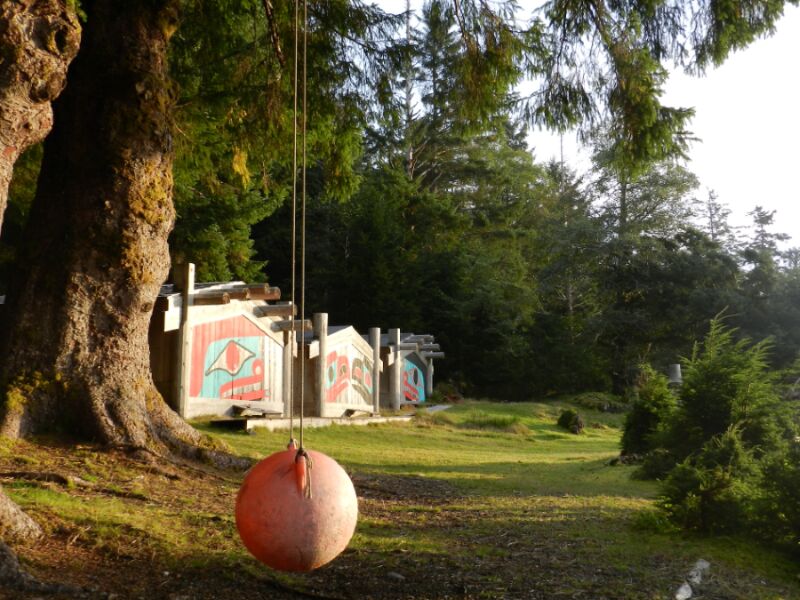
“When I’m on the land or the water, I feel so happy because I know this is where I belong. This is where I need to be. It’s a good way to disconnect from the chaos of the world.”
These are the words of Gul Ḵihl Gad Yakgujanaas, youth camp director for ‘Laana DaaG̲ang.nga Swan Bay Rediscovery Program on Haida Gwaii. A former camp participant, she worked her way up from volunteer to student staff to camp director.
Gul Ḵihl Gad, who also works as a part-time paramedic, has been attending these camps since she was a child. “My first memory would be visiting the village sites,” she reflects. “That was one of my first times in Gwaii Haanas, and we camped out in the village sites in tents.”
Building a Program to Last
The ‘Laana DaaG̲ang.nga Swan Bay Rediscovery program has been a fixture in Gul Ḵihl Gad’s life, and the lives of hundreds of other Haida and non-Haida youth.
Almost 50 years ago, the Haida Nation set out to reconnect youth (ages 10 to 18) with Haida stewardship and culture by offering rediscovery camps in T’aalan STl’aang Lepas Bay on the north end of Graham Island, Haida Gwaii.
The popular camps inspired other Indigenous Nations and served as a blueprint for more than 30 camps across the globe, uniting young people with the cultural practices, language, values, and history of their ancestors.
In 2002, Skidegate Band Council helped establish a second rediscovery camp at ‘Laana DaaG̲ang.nga Swan Bay, located within the boundaries of Gwaii Haanas National Park Reserve, National Marine Conservation Area, and Haida Heritage Site – an archipelago of lush forested islands that have been co-managed by the Council of Haida Nation and Parks Canada since 1993. The new program meets the needs of the Haida citizens living at the south end of Haida Gwaii.
When educator and outdoorsman Nang Guulas Danny Robertson first got the call that ‘Laana DaaG̲ang.nga Swan Bay needed an experienced program manager, he jumped on board.
It’s not just a summer camp for kids.
“I was working in the schools on Haida Gwaii [at the time] when the Skidegate Band Council asked if I would take on the summer programming,” says Danny, who would become a founding member of ‘Laana DaaG̲ang.nga Swan Bay Rediscovery Program.
Stepping into the role was a natural fit for Danny, who is non-Indigenous and a proud adopted member of the K’aadas Ga Kiigawaay clan. Prior to his role at ‘Laana DaaG̲ang.nga Swan Bay, Danny had spent many years working in outdoor spaces. “I’ve been a kayak guide, a rock-climbing instructor, worked in schools, and [worked] with at-risk youth.“
Working in partnership with Elders, Knowledge Keepers, and the Skidegate Band Council, Danny helped shape and deliver the programming that continues to run today.
“We went from two camps to nine by our fourth year,” says Danny. “Now every camp is full with waiting lists.”
One of Danny’s favourite programs, the leadership course, was created to meet the growing interest from youth participants.
“That’s a program I developed specifically,” he says. “I found we had participants that had gone through maybe a pre-teen camp, then they came back and did a teen camp, and now they want to keep coming. Some of those kids we have working for us today.”
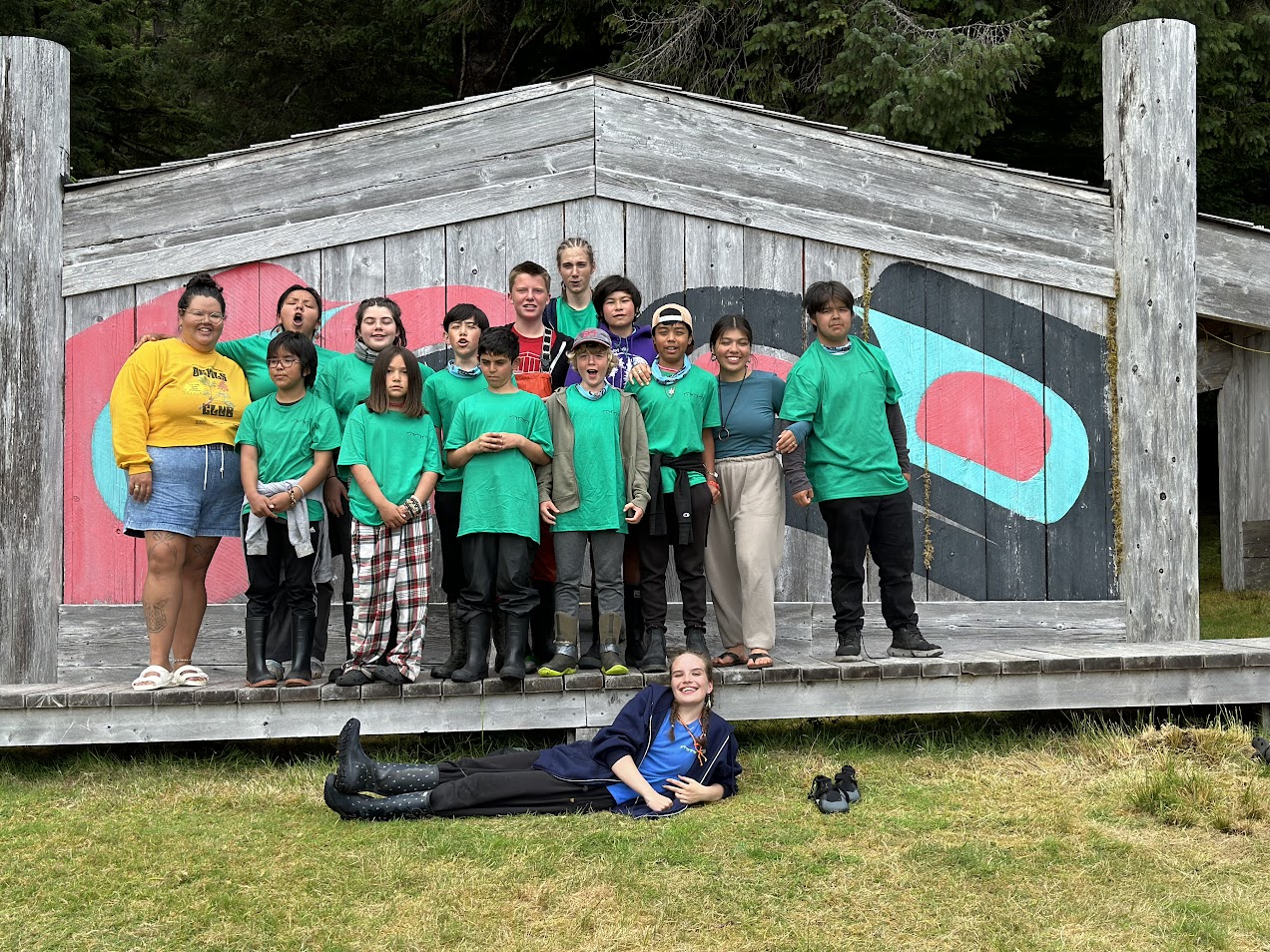
Gul Ḵihl Gad is among the many beneficiaries of Danny’s leadership program. With warm encouragement from family and friends, Gul Ḵihl Gad would spend her summers at ‘Laana DaaGang.nga, immersing herself in Haida cultural teachings and wilderness training. She would often stay on after the program ended to help shut down the camp. Her experience reflects that of many others, with more than half the camp’s staff made up of former participants.
“It’s not just a summer camp for kids,” explains Danny. “It really stands out among the youth – they’re our biggest judge. It’s the youth who really need to give us the two thumbs up.”
Today, the popular summer programs fill out within the first 15 minutes of registration.
Fostering the Next Generation of Leaders
The ‘Laana DaaG̲ang.nga Swan Bay Rediscovery’s long-term impact comes from a strong respect for Haida cultural values. The program, which is open to Haida and non-Haida participants, is ultimately working towards the goal of empowering Haida youth and continuing to share Haida knowledge in a respectful and appropriate way.
“As a non-Haida person, there’s some knowledge that’s just not mine to share,” says Danny. “It has to be the appropriate person, or the appropriate space and time.” To truly respect Haida culture and values, non-Haida like Danny must recognize the boundaries of their roles at camp. “That’s why it’s so important to have youth mature into leadership roles.”
Over the years, Danny has watched participants like Gul Ḵihl Gad embrace opportunities to learn and then step into leadership roles that require confidence, ambition, knowledge, and a knack for understanding the mentality of youth.
“It takes a special person to be able to run a program like this,” says Danny. “Gul Ḵihl Gad embodies it all. To watch her [having] gone through the program over the years and then ended up where she is now [being] in the decision-making capacity behind the scenes with me. She is phenomenal.”
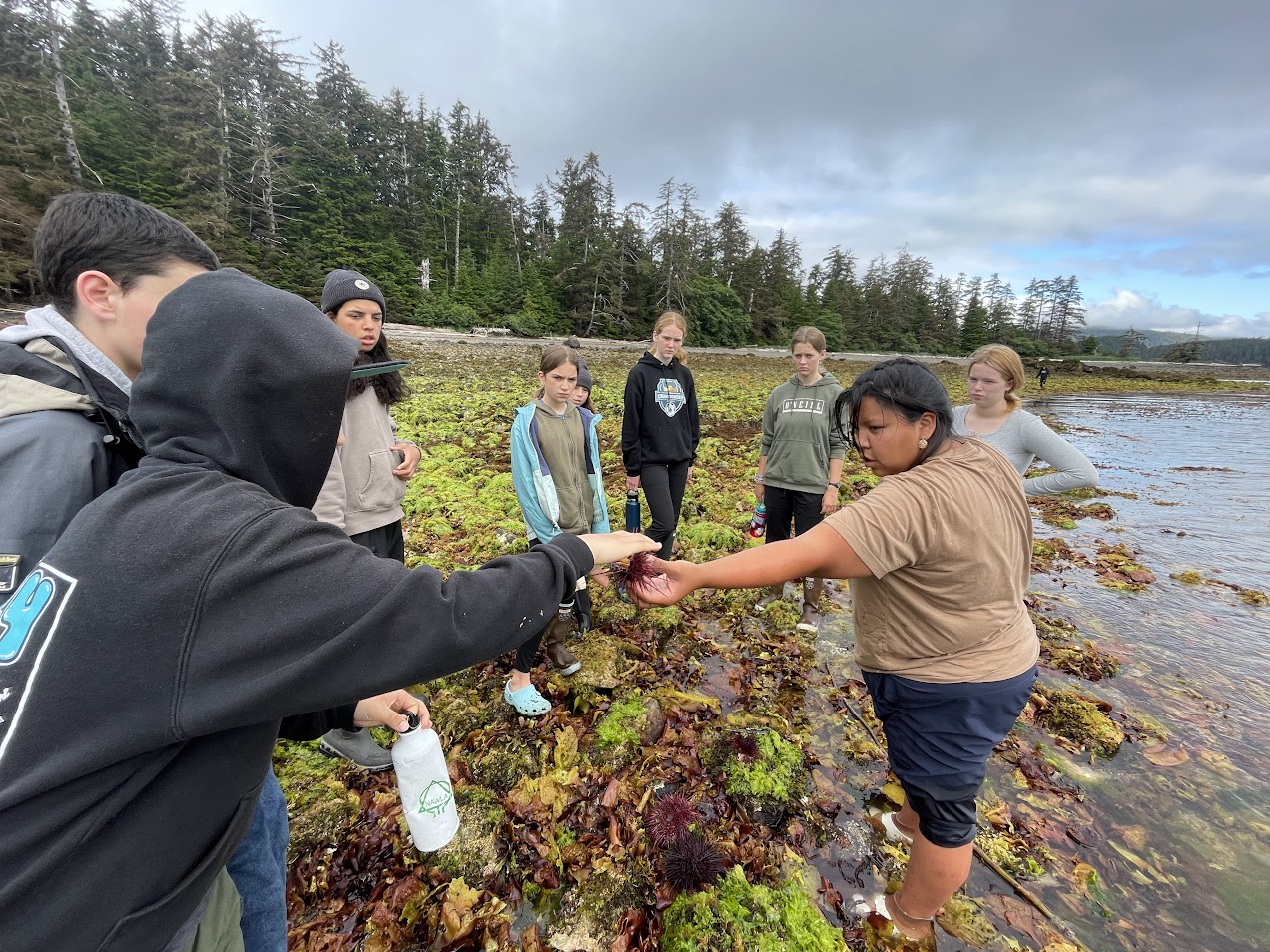
Having role models who have been through the ‘Laana DaaG̲ang.nga programs are important, says Gul Ḵihl Gad, “Because we understand how the program is run from going through it [ourselves] year after year.” Staff can then encourage program development based off their own experiences and incorporate their own knowledge into their teachings.
“It’s really important to keep our culture alive and thriving,” says Gul Ḵihl Gad. During camp, she takes participants to significant sites and tells stories that she has learned from Elders and Knowledge Keepers. “That’s the best way the kids learn. They’re looking at the place where that story happens. It’s a better way of learning our stories, to witness where the event happened.”
It’s good to teach these kids their identities as Haida.
The ‘Laana DaaG̲ang.nga team, with Gul Ḵihl Gad’s leadership, is working on building a safe and accessible space for Elders to use during the camp and reinvigorating their cultural exchange program. “I have a million different things I want to do all the time,” she says. “I really want to raise a ceremony longhouse where we have our ceremony nights at the end of the week.”
It’s a difficult balance, but Gul Ḵihl Gad’s goals are possible thanks to the support and dedication of the camp staff and growing cohort of student staff and volunteers.
“I know a lot of these kids want to come and work for us, even kids who haven’t gone through the leadership program,” says Gul Ḵihl Gad. “I know that the future of our program is in really good hands.”
Empowering Youth Through Haida Values
Without a doubt, the camps are changing the way a new generation of youth relate to themselves, each other, and the land and waters which sustain them.
“It really does change the lives of the children,” says Gul Ḵihl Gad. “I’ve witnessed it a lot, where there’s these kids who grew up in the foster care system who haven’t spent much time on Haida Gwaii.” Gul Ḵihl Gad, and the other camp leaders, take pride in teaching camp participants everything they know about their culture.
“It’s good to teach these kids their identities as Haida,” she says. “It’s a really important way to keep our stories alive and to pass them down from generation to generation. That’s the only way the [stories] survived, was through oral storytelling.”
The immersive experience of the Haida cultural teachings and activities encourage all youth, both Haida citizens and non-Haida residents, to build confidence, knowledge, and self-esteem. But for some Haida youth, the camps are a chance to step into an empowering role amongst their peers.
Many local participants, Haida and non-Haida, are neighbours or classmates, explains Danny. “It develops a different level of relationship that’s really important,” he says. The Haida youth, who are often familiar with food fisheries practiced within Haida communities, can step up and host the non-Haida youth attending camp. “For example, if there’s a Haida youth who really knows how to harvest a scallop, or can fish in a certain way, then non-Haida kids can learn from them. That’s so empowering.”
“It’s a good thing,” says Gul Ḵihl Gad. The non-Haida youth develop an appreciation for Haida culture after participating in the program. “We teach them how to respect our culture and all our Haida values.”
One Potato, Three Matches
Gul Ḵihl Gad also describes Wanagan time, which the youth participate in every day during camp. “They have to sit on their own and reflect and learn how to be by themselves.” Each day, Wanagan time gets further apart, until they are ready to spend a “solo” night alone.
Leading up to the solo, Gul Ḵihl Gad explains, “the kids are taught survival skills, like how to make a fire, build a shelter, and what foods you can and can’t eat.” The youth spend about 18 hours in a remote location. “They’re given a potato and three matches.”
The solo experience, which is offered to pre-teens and teens, helps youth to become independent and overcome their personal challenges, leaving them with the skills to thrive alone in the wilderness of Haida Gwaii. Gul Ḵihl Gad was 10 years old when she completed her first solo.
“I completed my solo on my first attempt,” Gul Ḵihl Gad reflects. “I made a shelter, didn’t make a fire – just because I didn’t feel like making one. I spent the whole night in my shelter.”
“I remember singing Haida songs to keep myself busy and I was probably just encouraging myself, like, ‘You can do this, you’ll make it through the night.’”
Solo participants rejoin their peers for a celebration the following evening where they vote to decide the recipient of the Guudang Xyuuwid Stone Ribs award. Based on a Haida supernatural being who saved the people of K’yuusda from the terror of a giant K’uustan Dungenous crab while wearing his copper skinned X̱aagu cloak, the award is given to a participant who underwent a dramatic transformation at camp and best embodied Haida values.
“A highlight is our ceremony night where we celebrate the youth we voted for Stone Ribs,” says Gul Ḵihl Gad. The youth are encouraged to dress up and help with ceremony preparations. “We have this really amazing dinner, we do our ceremony, and then we’re outside singing and dancing.”
“I’ve made [my own] tradition to sing this certain song that my mum taught me – a lullaby I used to sing to my niece every night – it’s a song you sing to say goodbye to somebody.”
The evening wraps up with a final fire circle for reflections, dessert, and games.
“We’ll stay up pretty late that night,” Gul Ḵihl Gad smiles. “That’s probably one of my favourite things we do. There’s a lot of other favorites. It would take me a long time to talk about everything.”
Using funding from the Conservation Endowment at Coast Funds, the Council of the Haida Nation invested more than $1.6 million between 2011 to 2025 to support operations at the Haida Gwaii Youth Stewardship program, T’aalan Stl’ang Lepas Bay Rediscovery, and ‘Laana DaaG̲ang.nga Swan Bay Rediscovery.