Estimated Reading time

5 Mins
Khasalus Kolten Grant’s Art Gives “Spiritual, Physical, and Emotional Strength”
The Undersea Kingdom: Thinking Outside the Box, emphasizes family lineage, gratitude, and strength.
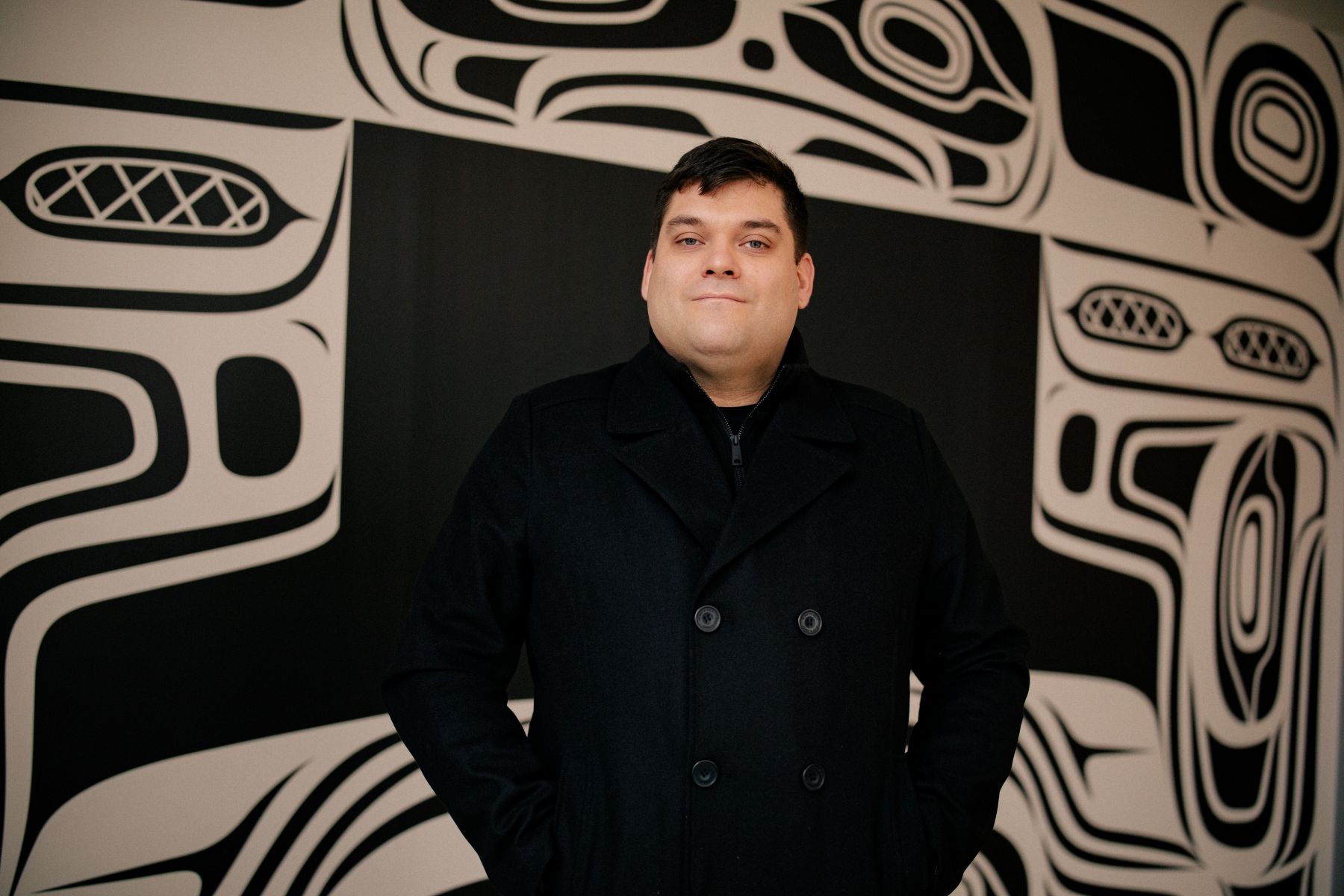
Khasalus Kolten Grant is a multidisciplinary artist with family ties to the Musgamagw Dzawadaenuxw, Kwakiutl, Tlowitsis, Squamish, and N’Quatqua St’at’imc Nations. He works across a range of artistic practices including cedar wood carving, silver jewelry making, digital art, printmaking, and painting. His mentors include Klatle-Bhi Charles Sam, Kevin Cranmer, Phil Gray, and the late Richard Baker.
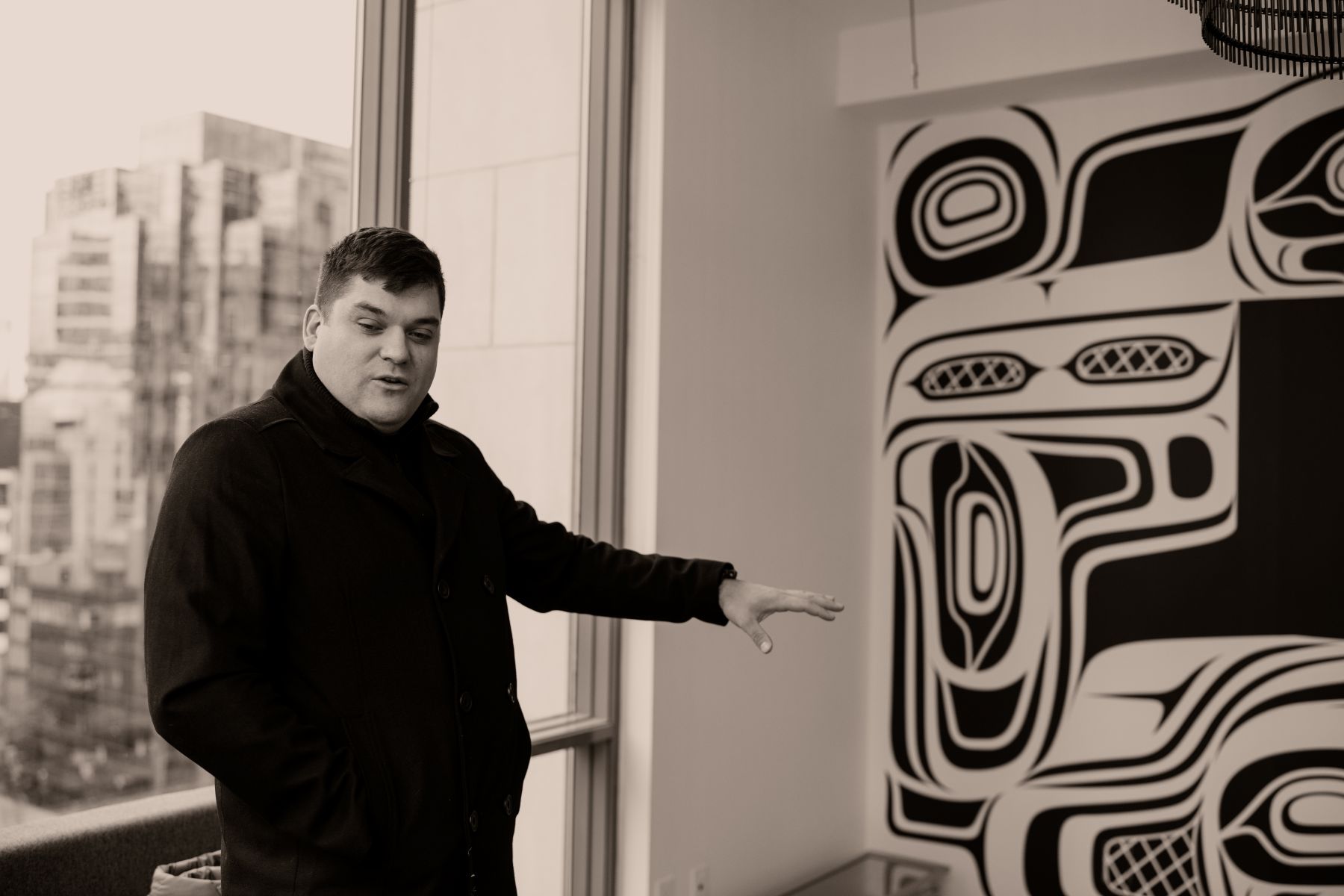
Kolten recently designed a mural for Coast Funds’ new office. Drawing from his deep connection to culture and family, Kolten’s mural uses formline and technical elements to depict spiritual beings and teachings that have influenced his life. In his role as Hamast’sa, Kolten carries the responsibility to pass on his artistic and cultural knowledge to his children and future generations.
The Undersea Kingdom: Thinking Outside the Box
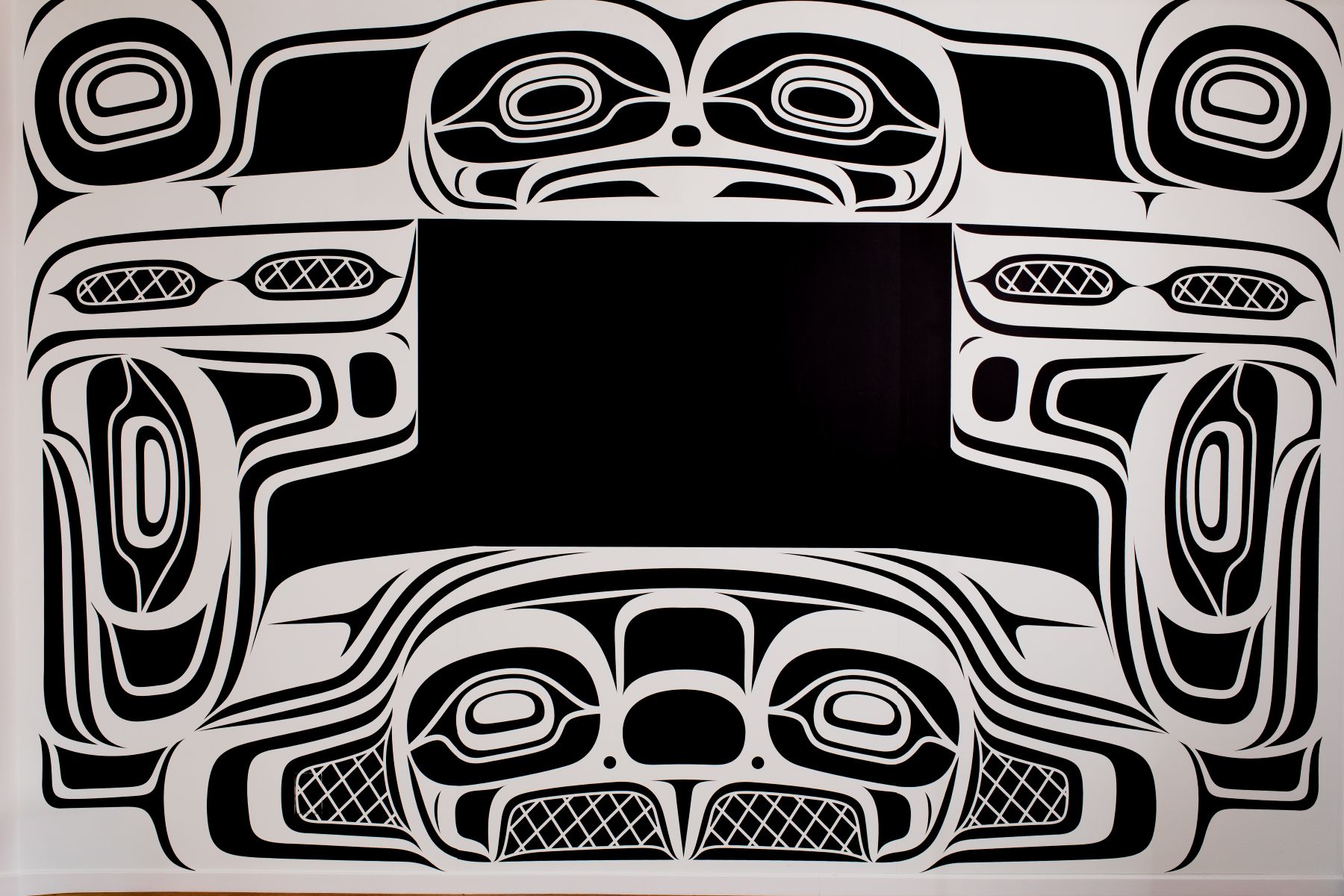
“The bottom center figure represents a being called Sagadino in my Tlingit heritage, it’s the Chief of the Undersea Kingdom. [It is also] the Kumugwe, which we call Tlakwagila from the Musgamagw Dzawada’enuxw. He is referred to as the bringer of wealth, due to the prosperity of the sea, abundant with resources for my ancestors. On either side of him is his large pectoral fins that go right out against the edge of the wall.
“My family is from the house of Lilawagila, we come from a family lineage called Tlakwagila with our original ancestor descending from a supernatural whale. To honor that, [above are two] diving whales, and they’re killer whales, but they also represent the motif of the salmon, to pay homage to the salmon people of the Northwest Coast.
“The design above [the whales] represents eyes. This design is used in many of our Chilkat robes, which have been passed down from my five-times great-grandmother, Anisalaga Mary Ebbets Hunt from Tongass, Wrengall, and Sitka Alaska. Essentially, what [the eyes] represent is a window for our ancestors to look through.
“I was taught by my grand-uncle Gigaemi Frank Baker, that when you look at traditional formline, the black represents the universe, the red represents the blood of our ancestors and the blood that we carry, and the negative space is the window that our ancestors look through. It filters so only positivity comes through. Bringing spiritual, physical, and emotional strength to the space, while also giving protection.
“Above those two designs, I did two salmon eggs in the top right corners, and then I did the frog design at the top centre. While connecting the two I discovered it also represented two humpback whales which pays homage to my Musgamagw Kwikwasutinuxw family. The frog is a messenger from the spirit world and is an extremely sacred animal for my people. It represents a clan crest that I have from Tongass, from the Tlingit. In this particular design, he would be the messenger for Kumugwe, passing information back and forth from the sea to the land, as well as the spirit world.”
Generations of Inspiration
“I’ve always been an artist. Ever since I was a little kid – I was always drawing and reading and experimenting with different art forms. I got into it because of my great-grandmother, Tlakwagila’ogwa Lucy Emily Baker.
“She was in hospice in North Vancouver, on her way to cross over. She was a very stoic and powerful woman…I went to go see her with my mum. As soon as I walked in the room, she sat up, and she stared me right in the eyes, maybe like 15 minutes went by. My mom nudged me, and she’s like, ‘Are you ready to go?’ We had been sitting there for an hour and a half. That’s how fast the time went by. I gave [my great-grandmother] a kiss on the forehead and left.
To sing, to speak the language – I think that’s the biggest reason why we keep going.
“For a few days, I was thinking about everything that she did for all of us. Everything that she carried – all the knowledge. She was such a prestigious and humble person. That was all the things she taught us growing up. And all I could think of was, ‘How am I going to pass this down to my children?’
“At the time, I’m thinking, ‘I can’t sing, I don’t know if I could dance, but I know I can draw.’ So, I started researching and learning to paint…My uncle, Klathe Bhi – I used to weed his garden as a little kid – I went down and knocked on his door and I told him I wanted to carve… I wanted to do a mask. And he’s like, ‘Well, you got to find some wood, and you got to find a knife.’ I tracked down a knife, and I tracked down a piece of wood…I don’t think I stopped after that.
“I was kind of drawn back to my culture.”
Stepping Up as Hamat’sa
“I asked my grand uncle, Gigaemi Frank Baker who’s a Hereditary Chief, ‘Who am I? Where do I come from?’ He started training me from there. I am constantly picking his brain and asking questions…I didn’t realize the responsibilities I had, and I think it was the Creator’s way of shifting me back.
“In 2021, we had our memorial potlatch, and I went to this island called Hukwappa, about a 45-minute boat ride from Gildford Island. I spent five days there, fasting with my uncle, Xusumda’as Kwakwee Baker. It was a supernatural place. I was initiated as the Hamat’sa, and ever since then, I’ve just been learning and helping my relatives learn. It’s a big responsibility.
“A Hamat’sa is the most prestigious position within our sacred cedar bark ceremony, T’seka, and is handed down from the eldest to the eldest male descendant from the Chief. For every Chieftainship in my culture, there is a copper to show that legitimacy, and with every copper a Hamat’sa is initiated to carry it for the future generation to uphold down the road.
“My title that comes with my Hamat’sa, is Baxbakwalagalis. It’s the first Hamat’sa of position that came down to my five-times great-grandfather, Johnny Nelson. It’s been going since the beginning of time…I’m motivated by that. There’s a reason why we’re here, doing these types of things to honour our ancestors. My mum, grandmother, and great-grandmother all went to residential school and had the effects that came with it. Even to carve a mask, you would go to prison.
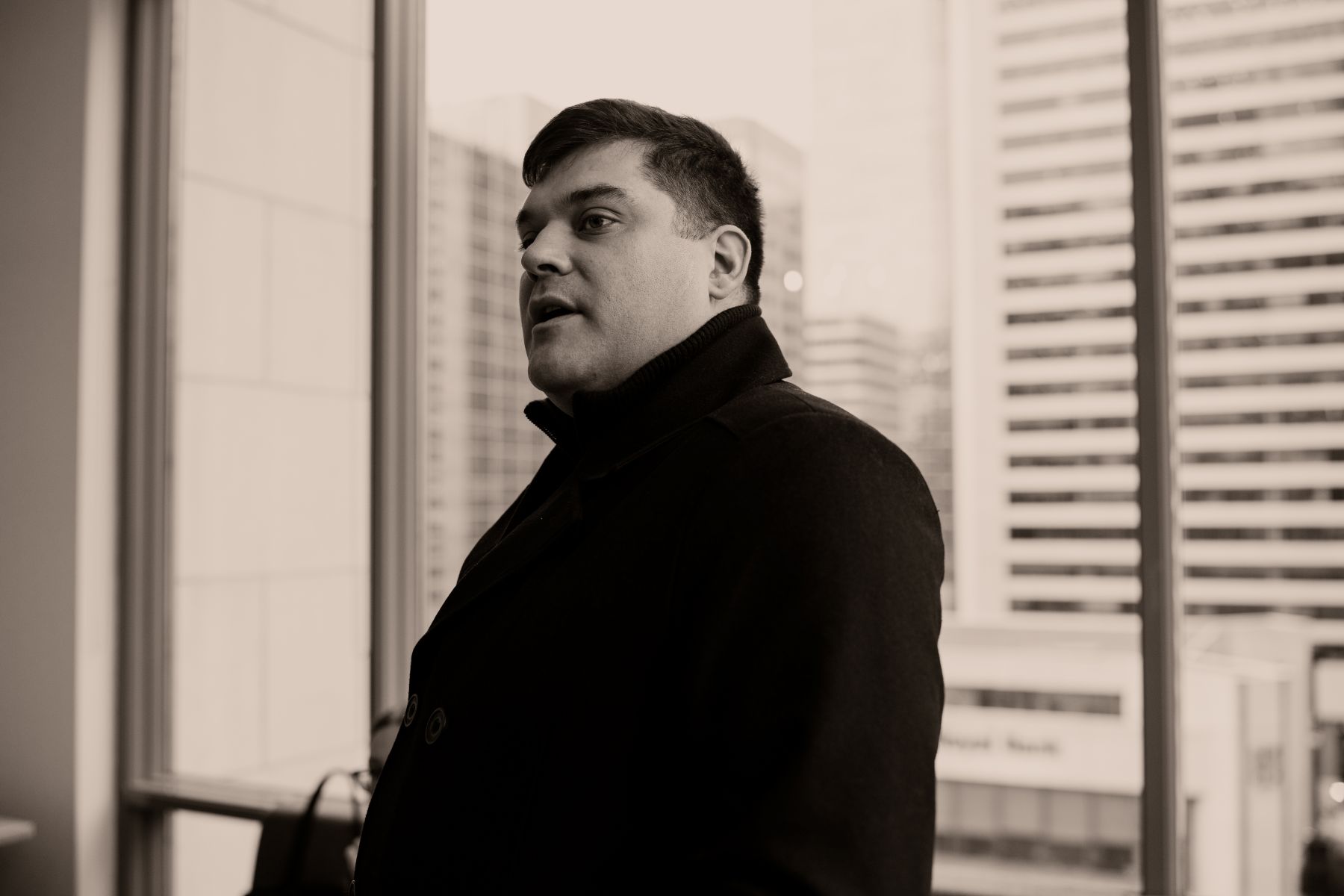
“To sing, to speak the language – I think that’s the biggest reason why we keep going. It’s about our children and grandchildren having what we have, and what our great-grandparents had. And the blessings that come with that.
“One of my uncles, Walas Gwayam Richard Dick taught me, [speaks in Kwak’wala] ‘Where would we be without our children?’
“Both my sons love to colour and paint, and I bring them to ceremonies so they can watch… The beauty of this is, I get to walk my son to school in the morning, enjoy a coffee, and then start carving.”
Coast Funds commissioned Khasalus Kolten Grant to design a mural for Coast Funds’ new office at 925 West Georgia Street in Vancouver to pay homage to the First Nations Coast Funds serves, reflecting Coast Funds’ core values of respect, good relations, integrity, and collaboration.
For commissions or to learn more about Khasalus’ artistic practice visit khasalus.ca